It’s time to say goodbye to pastels, gingham, and poolside lounging, and fall back in love with warm textiles, mood lighting, saturated colors, and movie nights. Get inspired as five fabulous designers share tips for creating a cozy atmosphere as the days grow shorter and chilly weather sets in.
Photograph by Joseph Tiano
WARM UP
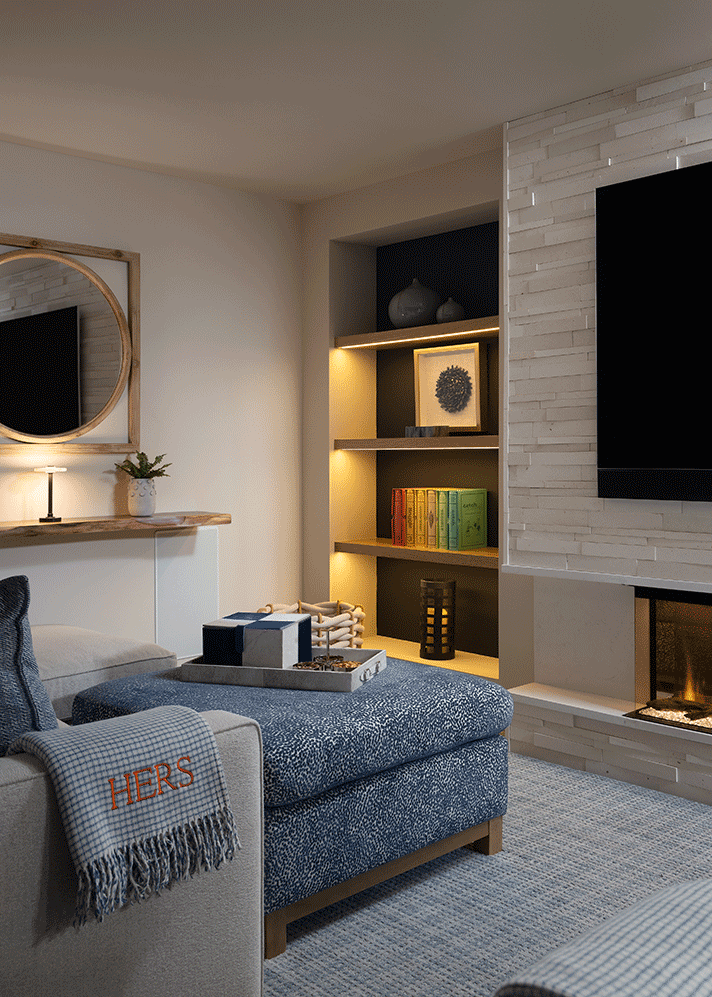
“The client requested an inviting space to spend time with family and friends to play games, watch sports, or enjoy movies. To warm up this lower level, we incorporated rich wood accents, textured stone, and layered lighting, using cozy fabrics and blankets to soften the hard surfaces of the fireplace wall and built-in bookcases.
Integrated shelf lighting highlights accessories and creates warmth during evening use, making the built-ins feel more like furniture than architecture.
The overall goal was to provide a sophisticated yet approachable space where the homeowners could relax, entertain, and enjoy a sense of everyday luxury.” — Ruth Casper, Ruth Casper Design Studio
RUTH’S DESIGN TIPS:
- Layer a variety of textiles to create comfort and depth. Combining upholstered furniture with soft throw blankets, decorative pillows, and flooring helps to make a room feel warm and inviting.
- Mix natural and tactile materials to introduce warmth and character. Elements such as wood, woven fibers, stone, ceramics, and textured fabrics bring dimension to a space and prevent a neutral palette from feeling flat or sterile.
- Incorporate layered lighting to highlight texture and create ambiance. Accent lighting within built-ins, table lamps, and warm lighting tones can emphasize architectural details and decorative accessories while making the space feel cozy and comfortable throughout the day.
Available at MDC: Ruth Casper Design Studio throw blanket and ottoman fabric; Beaver Tile and Stone fireplace stone; Alexandra June games, accessories, and lamp; CAI Designs sectional sofa.
Photograph by Beth Singer
SATURATED COLOR
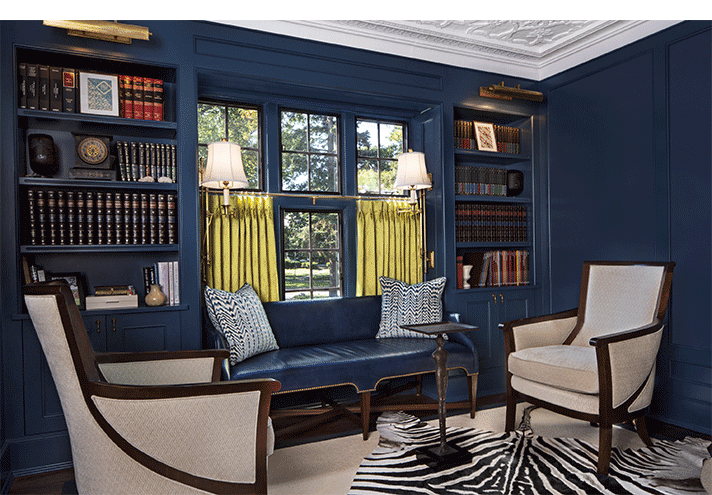
“This historic home is spacious and open, so we wanted this music lounge and bar area to feel intimate and cozy. We saturated the walls and custom settee in deep blue to offset a stunning 100-year-old decorative plaster ceiling. North and west-facing windows fill the room with natural light. It’s the perfect place for the homeowners and guests to enjoy a drink before a night out.” — Arturo Sanchez, Art | Harrison Interiors
BARRY HARRISON’S DESIGN TIPS:
- When working with color, it’s important that each direction of the room relates to another. North (ceiling)/ south (floor) and the perimeter should harmonize. In this instance, the floor is a rich, dark wood, so to balance the bright ceiling, we have a light area rug and topped it with an animal print hide.
- To create a cozy space, consider saturating the space in deep burgundies, greens, or blues. Then make your space pop with the color of fall leaves—those accent colors really help bring color drenched rooms to life.
- Don’t be afraid of metal finishes. When designing with deep jewel tones, brass is really sumptuous. We used brass on the bookcase lighting, lamps, and drapery hardware.
Available at MDC: Tennant & Associates furniture and drapery fabrics, leather bench upholstery; CAI Designs chairs and accent table; City Lights Detroit lighting.
Photography by Laura McCaffery
OUT OF THE WOODWORK
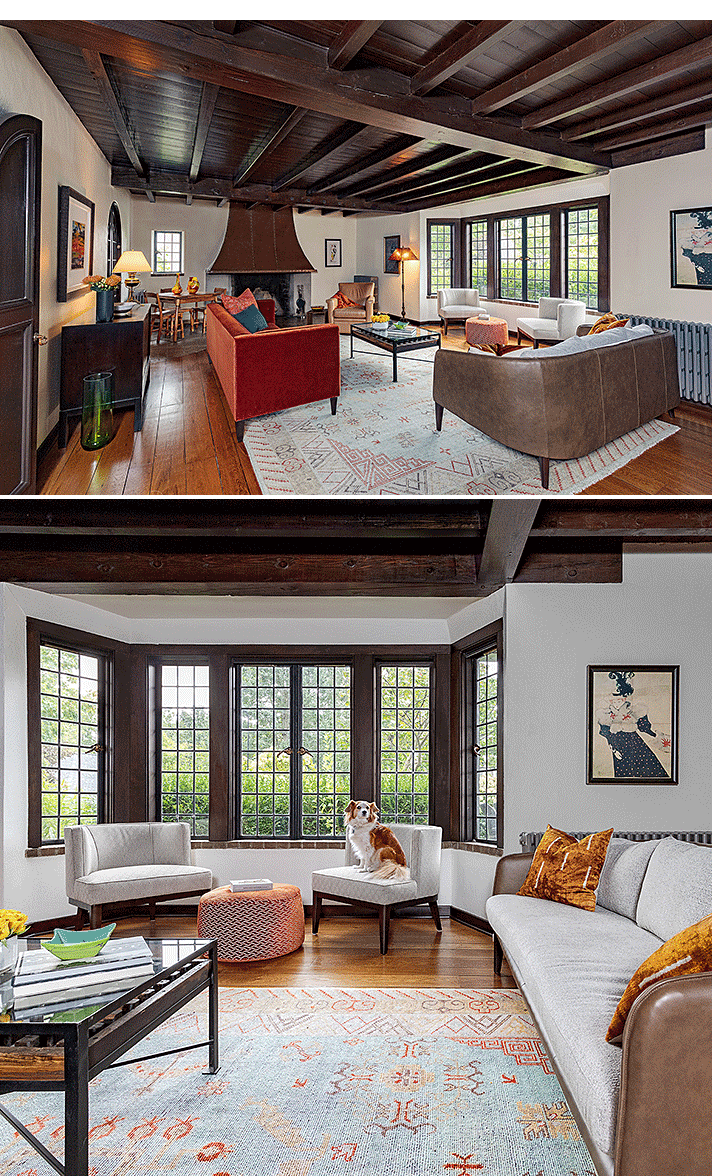
“This original Wallace Frost home elicits remarkable warmth through beautifully proportioned spaces, rich wood ceilings, original floors, and incredible natural light. Rather than trying to compete with those elements, our goal was to let them continue telling the story of the home while creating spaces that feel welcoming for modern life.
We selected furnishings with simple, timeless forms that quietly support the architecture rather than drawing attention away from it. Soft upholstery, natural textures, and a palette of warm neutrals help balance the depth of the wood without making the rooms feel heavy. We then introduced color sparingly through textiles, artwork, and accessories, allowing each piece to add personality while maintaining an overall sense of calm.
Historic homes often have a richness that's difficult to replicate today. I believe the role of the designer isn't to erase that history, but to build upon it thoughtfully—creating interiors that feel as though they've always belonged there.” — Jennifer Baross, Bureau of Interior Design
JENNIFER’S DESIGN TIPS:
- Start by embracing the wood instead of trying to cover it up. Rich wood adds character and permanence to a home, so allow it to be the foundation of your palette. Lighter upholstery, natural linens, and layered textures provide contrast while preserving the warmth that makes the space feel inviting.
- Choose furnishings with quiet confidence. In rooms with strong architectural details, furniture doesn't need to compete for attention. Clean lines, timeless silhouettes, and quality materials allow the architecture to remain the focal point while creating comfortable, livable spaces.
- Layer warmth through texture more than color. Wool rugs, woven fabrics, leather, stone, and wood each reflect light differently and create visual depth without overwhelming the room. A restrained palette often feels richer than one filled with competing colors.
- Let natural light do the work. Wood tones change beautifully throughout the day as the light shifts. Rather than fighting those deeper tones, choose fabrics, finishes, and paint colors that complement the changing light. The result is a warm, inviting room for every season, especially during fall and winter gatherings.
Available at MDC: The Ghiordes Knot rug.
Photograph by Joseph Tiano
COZY QUARTERS
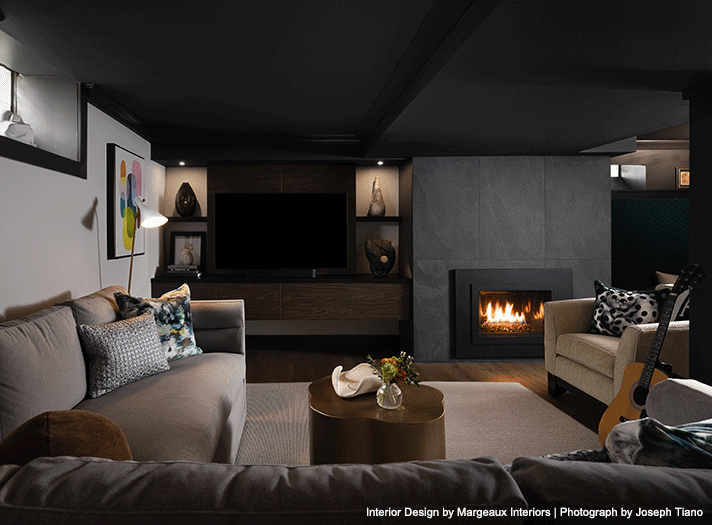
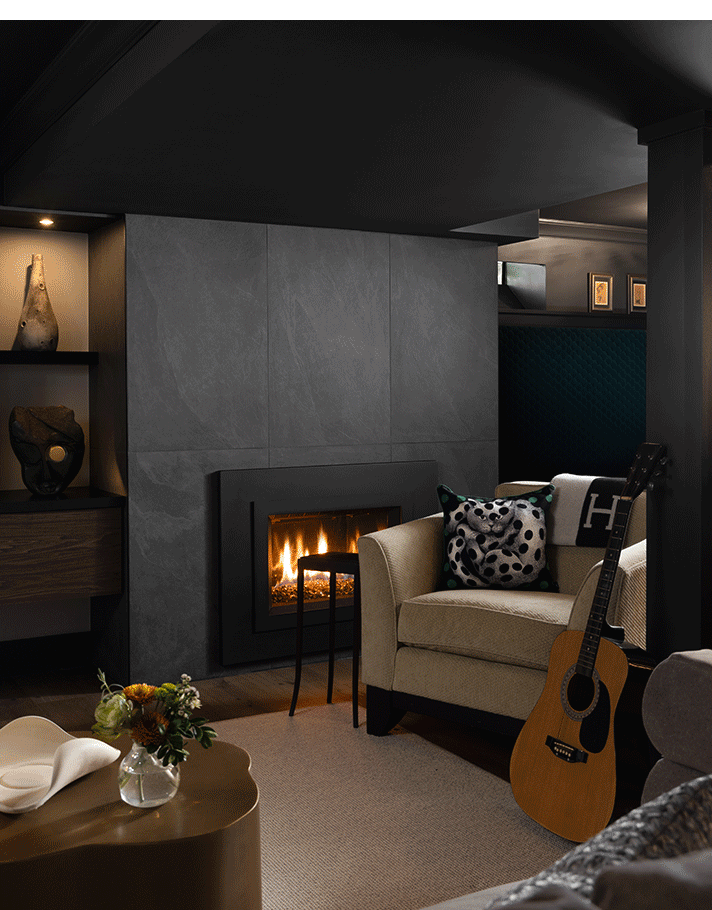
“The compact scale of this family room embraced the low ceilings and limited natural light rather than fighting them. The repeated dark, moody color scheme, layered ambient lighting, and low-profile seating created a purposeful snug and inviting space.” — Margaret Skinner, Margeaux Interiors
MARGARET’S DESIGN TIPS:
- Since wood burning and gas fireplaces have construction limitations, an electric unit may be a better option. Electric linear units have evolved into architectural focal points with more realistic flames in addition to sphere, stone, and glass media options.
- Use dimmers to create layers of light. Strategically placed 4-inch recessed fixtures along the outer seating area will visually push the walls outwards, creating an even glow. As the natural sunlight shortens in the colder months, linear and spotlight accent lighting highlights art pieces and shelved collections while adding warmth and shadows. Table and floor lamps, accompanied by wall sconces, are the finishing touch.
- Texture, texture, texture! Faux fur pillows, wool throw blankets, velvet upholstery, and nubby rugs not only add comfort, but they also add character to a cozy space.
Available at MDC: Tennant & Associates, Pindler, and Kravet/Lee Jofa/Brunschwig & Fils fabrics; CAI Designs sectional sofa and table; The Ghiordes Knot rug.
Photograph by Martin Vecchio
MOVIE NIGHT
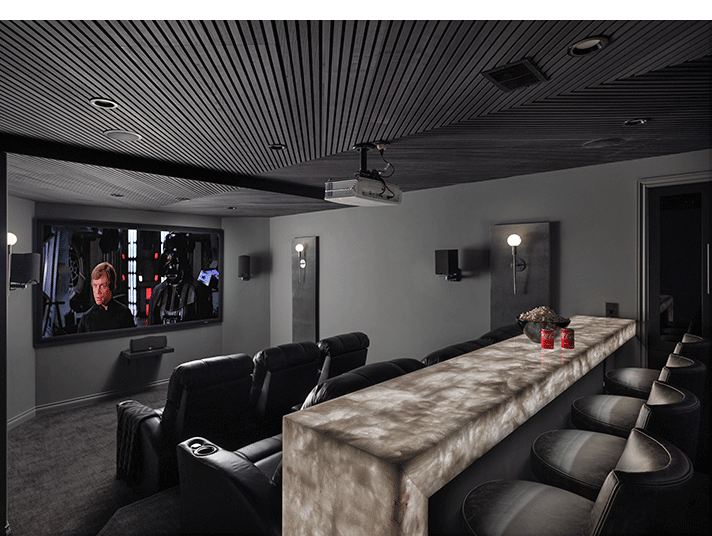
"Home theaters should be designed to be more than just a place to watch movies. This space was created as a versatile gathering space where family and friends can come together throughout the year. As the seasons change and we naturally spend more time indoors, the homeowners wanted a room that could easily transition from movie nights to game nights and casual entertaining.
Layered seating, including reclining theater chairs and bar seating, gives everyone a comfortable place to congregate, while multiple lighting options allow the room to shift from bright and social to soft and cinematic.
A rich, monochromatic palette, natural textures, and comfortable furnishings create a moody yet inviting atmosphere, making this space a family favorite retreat during all months of the year." — Johanna Goddard, Ellwood Interiors
JOHANNA’S DESIGN TIPS:
- Layer your lighting. Lighting plays a big role in creating a cozy atmosphere. Instead of relying on one overhead fixture, use a combination of sconces, accent lighting, and dimmers so the room can easily transition from game night to movie night. Soft, layered lighting creates a warm ambiance while reducing glare on the screen.
- Consider Acoustics. Great sound is just as important as a great picture. Incorporating acoustical features such as wood slat ceilings backed with an acoustical board, upholstered furnishings, and hidden or decorative acoustical panels help improve sound quality while adding texture and architectural interest to a space.
- Design for connection. One of the best ways to encourage people to gather is to create a space where they naturally want to spend time. Whether it's a dedicated theater, a cozy den, or a welcoming living room, thoughtful furniture placement, comfortable seating, and soft finishes can help make any room a favorite destination." - Johanna Goddard
Available at MDC: CAI Designs barstools; Schumacher acoustical panel fabric.