Arguably one of the most prominent areas of the home, the kitchen is a major investment intended to last for years to come. We asked five seasoned design professionals for their criteria in designing a kitchen with style that is not only beautiful but enduring.
Photograph by Brian Craig
FAMILY AFFAIR
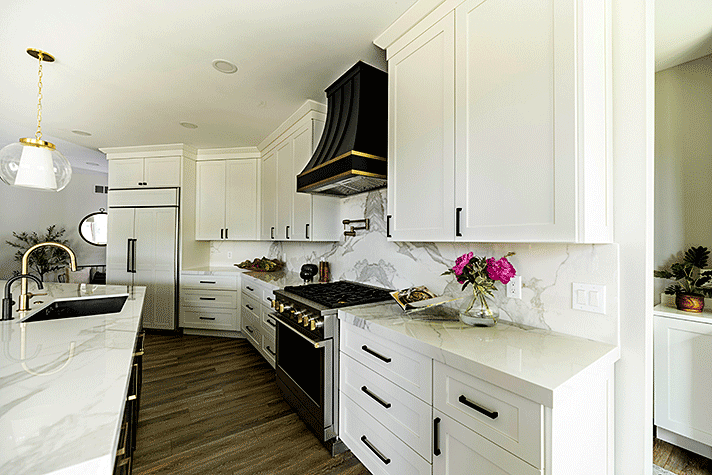
“This Metamora kitchen, originally designed in 2002, was reinvented to accommodate large family gatherings as well as allow for better storage and flow. The client’s criteria included enough space for two cooks to work comfortably together, seating for four at the island counter, bright yet subtle stain-proof countertops, and a dramatic hood design. We also wanted the design to reflect the relaxed and classic taste of the clients. Our team chose a beautiful porcelain product for the counters and backsplash that fits the bill perfectly. Custom cabinets tailor-made to fit the new space flawlessly brought storage and functionality to a level that exceeds expectations. As a bonus, we added a walk-in pantry for those larger household items.” — Joanne Ledbetter, Joanne Ledbetter Designs
JOANNE’S KITCHEN TIPS:
- Space planning is the most important aspect of great kitchen design. Form and function need to balance perfectly.
- Solidly constructed cabinets along with quality hinges and glides ensure doors and drawers operate efficiently.
- Good appliances are available at various price points, be sure to do your research on brands, recalls, and ratings.
- For a major remodel or new construction, hire a designer to ensure your investment is focused, creative, and will guarantee a beautiful result. Contractors are not conceptual designers — if you give them a professionally designed plan with everything laid out, the project is more likely to come in on time and budget.
Available at MDC: E.W. Kitchens cabinetry.
Photograph by Karl Moses
HIGH-FASHION FLAIR
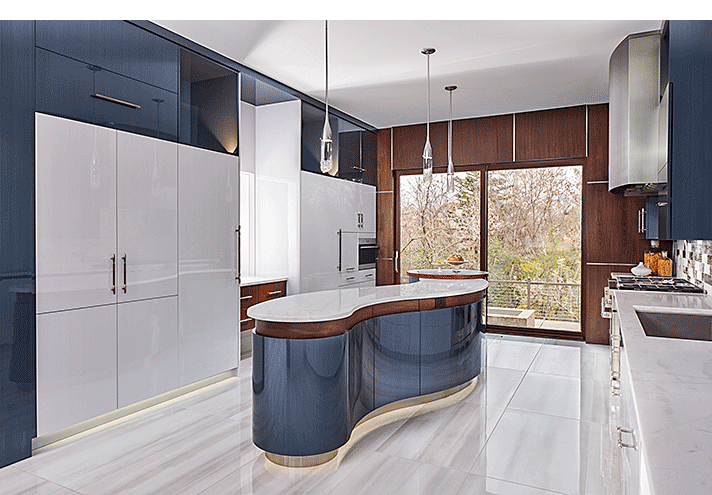
“This client has a home in Italy and was looking to translate that high-fashion aesthetic into her Michigan residence. The kitchen shows a bold use of color as well as high-gloss European character. Luminous white cabinets add contrast while wood finishes warm the space and natural stone flooring and counter tops anchor the room. The kitchen is adjacent to a pizza room and bar, so we installed a fun ‘take-out’ window behind the island. Another surprise included a hidden television that rises from the island.
To keep the kitchen looking beautiful for years, we used extremely durable quartzite stone on the countertops, commercial grade porcelain tile on the floor, and an automotive-grade finish on the cabinetry.” — Art Sanchez, Art | Harrison Interiors
BARRY HARRISON’S KITCHEN TIPS:
- Understand your storage needs. Not only the inventory you have, but which items require short-term verses long-term storage. Some pieces, like holiday dishware, may only make an appearance once a year as opposed to the things that you use daily. The white cabinets in this kitchen are for short-term items, while the blue cabinets are more for long-term storage.
- When thinking of functionality long term, consider your lifestyle. This client loves to entertain, so we installed a butcher block at the end of the island not only for cutting, but it functions as a stylish charcuterie board as well. Further, we designed the kitchen so that preparation is at the furthest end of the kitchen where the appliances are, and serving/plating is at the other end so that there is an easy flow in the space. Oftentimes, people design their homes with resale in mind. We encourage you to design it for yourself and someone else is sure to love it.
- Many clients feel as if they never have enough light when they’re working in the kitchen. Go bright! This becomes especially important as you age. There are many ways you can layer lighting as we did such as under the cabinetry along with pendants over the island.
Available at MDC: E.W. Kitchens cabinetry, Cercan Tile porcelain tile flooring.
Photograph by Beth Singer
IN THE ZONE
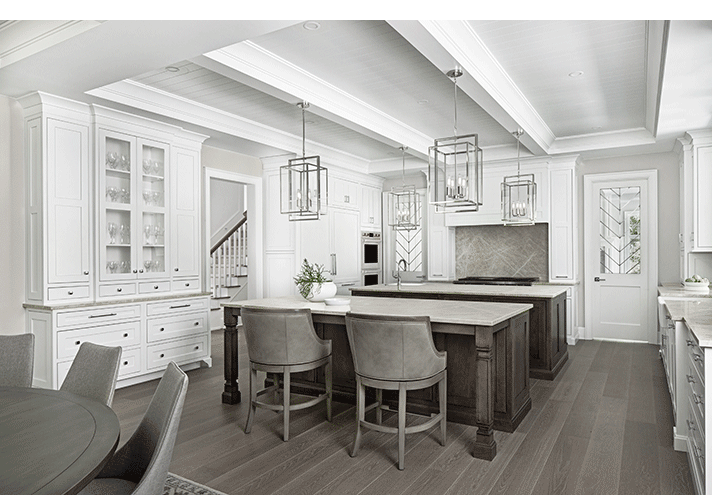
“For busy families it’s important to create zones that support the space’s needs and activities. For example, second islands with a refrigerator drawer and microwave have been successful additions in kitchens. This allows children the ability to handle tasks like packing lunches or snacks while staying out of cooking areas. White painted cabinetry is not only classic, but pairs expertly with quartzite countertops. This kitchen features a honed Taj Mahal counter that helps add warmth to the otherwise crisp kitchen. A large service bar, although meant to look like a piece of furniture, provides ample storage for dishware and serving pieces. Form doesn’t always follow function; in this case they integrate.” — Amanda Sinistaj, Ellwood Interiors
AMANDA’S KITCHEN TIPS:
- When planning a kitchen select your appliances first. What do you wish you had that you don’t currently? There are a lot of new products that homeowners are embracing like steam ovens and induction cooktops. Planning for standard sizes will allow you to easily update in the future as technology changes.
- Finishes set the atmosphere, so consider classic approaches like neutral color palettes and beautiful fixtures. It doesn’t matter if your style is contemporary or transitional, choose classic finishes like polished nickel and natural walnut stains that have proven to be timeless throughout the decades.
- Material choices matter. If durability is a concern, select materials that are less porous and easy to clean. For example, marble is beautiful but if it’s polished and left unsealed, it has a high likelihood of staining. Consider something less porous like quartzite. Honed finishes don’t etch as much and always be sure to seal your material with an impregnated (or penetrating) sealant.
Available at MDC: E.W. Kitchens cabinetry, CAI Designs counter stools and table, Designer Group Collection dining chairs.

Photograph by Martin Vecchio
SEAMLESS INTEGRATION
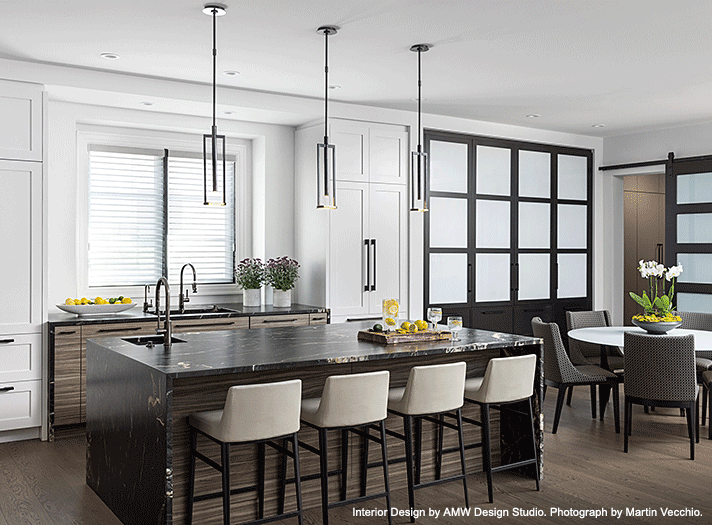
“When designing this space, we wanted to create a kitchen that blends well with the home’s open floor plan. Full-height, integrated cabinetry was preferred over a traditional upper/lower style. This allowed us to construct functional vignettes (i.e. sink wall, cooking wall, and island) that were highlighted by contrasting materials and strong design elements.
The dining area is defined by floor-to-ceiling cabinetry with grid pattern doors which function as a pantry for dishes and food as well as a workspace for small appliances. The two center doors tuck into pockets, allowing easy access to a working counter area. This keeps all the appliances hidden but accessible.” — Amy Miller Weinstein, AMW Design Studio
Available at MDC: Designer Group Collection table and chairs, City Lights Detroit island pendants.
AMY’S KITCHEN TIPS:
- A healthy dose of restraint is required when putting together a kitchen that’s built to last. Stay focused on the look and style you want to achieve and do your best to avoid artificial materials. Those quartz counters will not age well.
- Find inspiration in classic, stately homes — both traditional and contemporary — for ways to incorporate timeless elements that are here to stay.
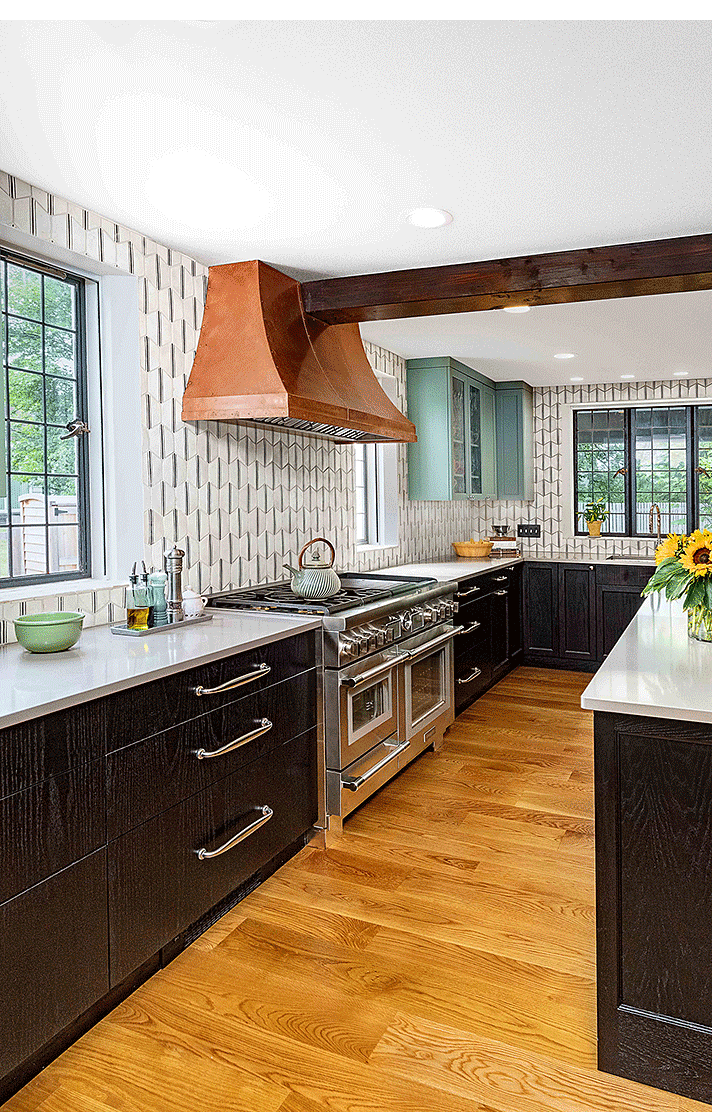
Photograph by Laura McCaffery
MODERN COMFORT
“This 1922 Wallace Frost-designed Birmingham cottage underwent a meticulous transformation. Once in disrepair, the home’s rebirth was guided by a reverence for its architectural heritage and an eye toward modern comfort. Every design decision honored the original craftsmanship — from the salvaged tilework painstakingly removed, cleaned, and reset, to the handcrafted reproductions created for pieces too damaged to reuse.
At the heart of the renovation, the kitchen embodies the project’s spirit of artistry and preservation. A custom copper hood, forged by local artisans, anchors the space while carefully sourced English hardware and custom-milled hardwood floors echo the home’s early twentieth-century detailing. Throughout, subtle updates enhance functionality without compromising authenticity.” — Jennifer Baross, Bureau of Interior Design
JENNIFER’S KITCHEN TIPS:
- A kitchen built to last begins with a careful balance between timelessness and what feels timely. The answer is rarely found in committing to a single style. Instead, longevity often emerges through thoughtful contrast — mixing materials, layering influences, and avoiding design decisions that tie the space too closely to a specific moment in time. Coincidentally, when a kitchen adheres too closely to a single trend or aesthetic, it can quickly feel dated. A layered approach, especially in materials chosen to age with character rather than to merely resist wear, allows the space to evolve gracefully. Natural stones with movement, woods that patina beautifully, and hardware meant to be touched daily bring durability that feels elevated, never utilitarian.
- For homeowners, the most productive conversations with a designer begin not with inspirational images, but with honesty. Tell us what frustrates you. What feels inconvenient? What has never worked? Visual references are incredibly helpful in establishing a shared language and sense of direction — but understanding how you truly live provide insight far more meaningful than replicating a photograph.
- If longevity is the goal, invest in what cannot easily be changed later: layout, cabinetry, lighting, and infrastructure. Decorative layers can evolve, but the foundation should remain steadfast. AND I love a style mash-up! A measured mix of styles and eras creates tension and depth — qualities that tend to keep a space relevant over time.
Available at MDC: Ann Sacks backsplash tile, Beaver Tile and Stone backsplash and accent wall tile.